Two weeks ago, I ran my first ultramarathon!
It was a 72-mile loop around Lake Tahoe. We started in Stateline, Nevada, and finished in South Lake Tahoe, California (less than one mile from each other, if I’d only walked backwards).
We started at 7 p.m. There was another runner who had done it several times before there at the start, and I asked his advice. “It really simple," he said. "Just don’t quit."
Concise. Profound. The type of advice you can mentally process at mile 65 of a 72-mile race.
So if you’re someone who is interested in running an ultramarathon, or just curious what it’s like running one, keep reading for a glimpse into what it’s like to run for 18 hours straight.
The Ultramarathon Requires a Different Mindset
An ultramarathon isn’t about speed, at least not for most people.
It’s about the practice of just not stopping and the will to keep moving forward. From the get-go, we knew that we wouldn’t be running the entire thing, especially not at 6,000 ft of elevation on a course with nearly 4,000 ft of gain.
Somewhat unique to this ultramarathon was that it was all paved, so not “technical” at all like trails. There were several major climbs where it was more effective to take a power walk than to force a slow, energy-consuming jog.
This was part of my “why” for running this event. After not running for most of 2024 while being pregnant and making a comeback in early 2025, I didn’t want to run a marathon and leave room to be disappointed that I wasn’t as fast as I used to be.
This ultra was a new, challenging goal in one of my favorite places and it was always about just finishing, no matter what that looked like.
Training Looks Different
Training for an ultramarathon meant a lot of slow, comfortable miles to gain time on my feet. I had a few runs where I felt great and sped up in the last few miles, but there was never pressure for me to do so.
I knew we’d be running through the night, so I practiced one or two night runs to get to know our gear and mentally prepare for lots of miles in the dark.
I also practiced run/walk intervals from early on, even though it didn’t feel 100% natural or comfortable. The ability to handle the physical starts and stops of the ultra was training in itself.
From my physical therapy perspective, the key was balancing the miles with smart strength work. My training included heavy posterior-chain lifts, single-leg stability work, and plyometrics to maintain power and resilience. I never skipped recovery weeks. Although my feet still feel as though they’ve aged 15 years, I was able to make it through training and race day injury-free!
Gear and Running Through the Night
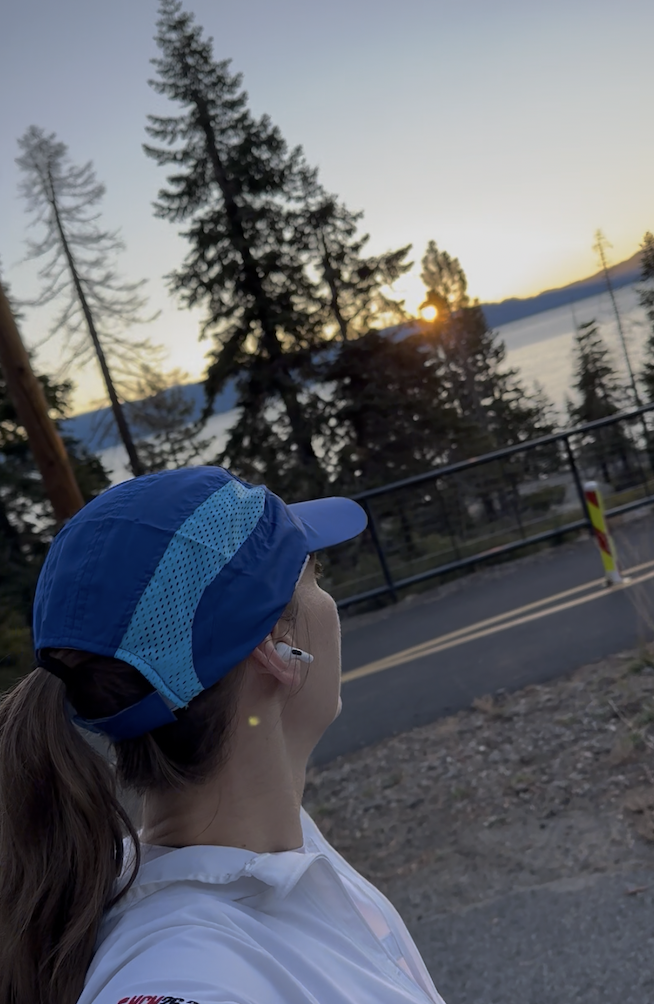
There’s a whole other world that exists when you’re running through the night.
For the first 50 miles, the sun was gone, the temperature dropped, and the world was mostly silent except for our footsteps. There was no moon that night, so the stars were extremely bright.
Running in the dark is both eerie and peaceful. Perhaps it was the sleep deprivation or that I rarely looked at my watch, but those miles all seem to blend together in my mind when I think back to the race.
Pro tip: If you ever plan to race overnight, practice with your gear in training. Know how it feels to run with a headlamp or a chest light. Know what clothing layers work when your temperature fluctuates. My light only lasted about five hours, so I brought a power bank and an extra handheld light.
Fueling: The Real Key to Success
Fueling was everything.
During an ultra, nutrition becomes as important as pacing. I ran the first two-thirds of the race with a hydration pack containing Tailwind and LMNT. During the rest stops every five miles, I had water, PB&Js, Halloween candy, Lay’s chips, chews, and pretzels. My goal was to stay slightly ahead of hunger and thirst, because once you fall behind, it’s hard to come back.
Perhaps because of that, my stomach never turned on me. Once the sun came up, I switched mainly to water and stuck to small, frequent bites of anything that sounded good.
Someone recently told me an ultra is like a “moving picnic.” You really do have to eat early and often in order to sustain the energy needed to keep moving forward.
The Final 8 Miles
The last eight miles were brutal. The sun came up around 7 a.m., and there was one major climb with about 16 miles left to go. As the day warmed up, the bottoms of my feet really began to hurt. I remember passing the “8 Miles to Go” sign and thinking how long that sounded. That was the only time I considered quitting and sitting on a boulder and waiting for someone to pick me up.
Even though I walked most of those last miles, I just didn’t quit. It was never about finishing at a certain time, it was about making it.
In those moments, I thought about the months of training, the hours of mental preparation, and the 65 miles I’d already run, and decided that quitting with eight miles to go wasn’t how the story ended.
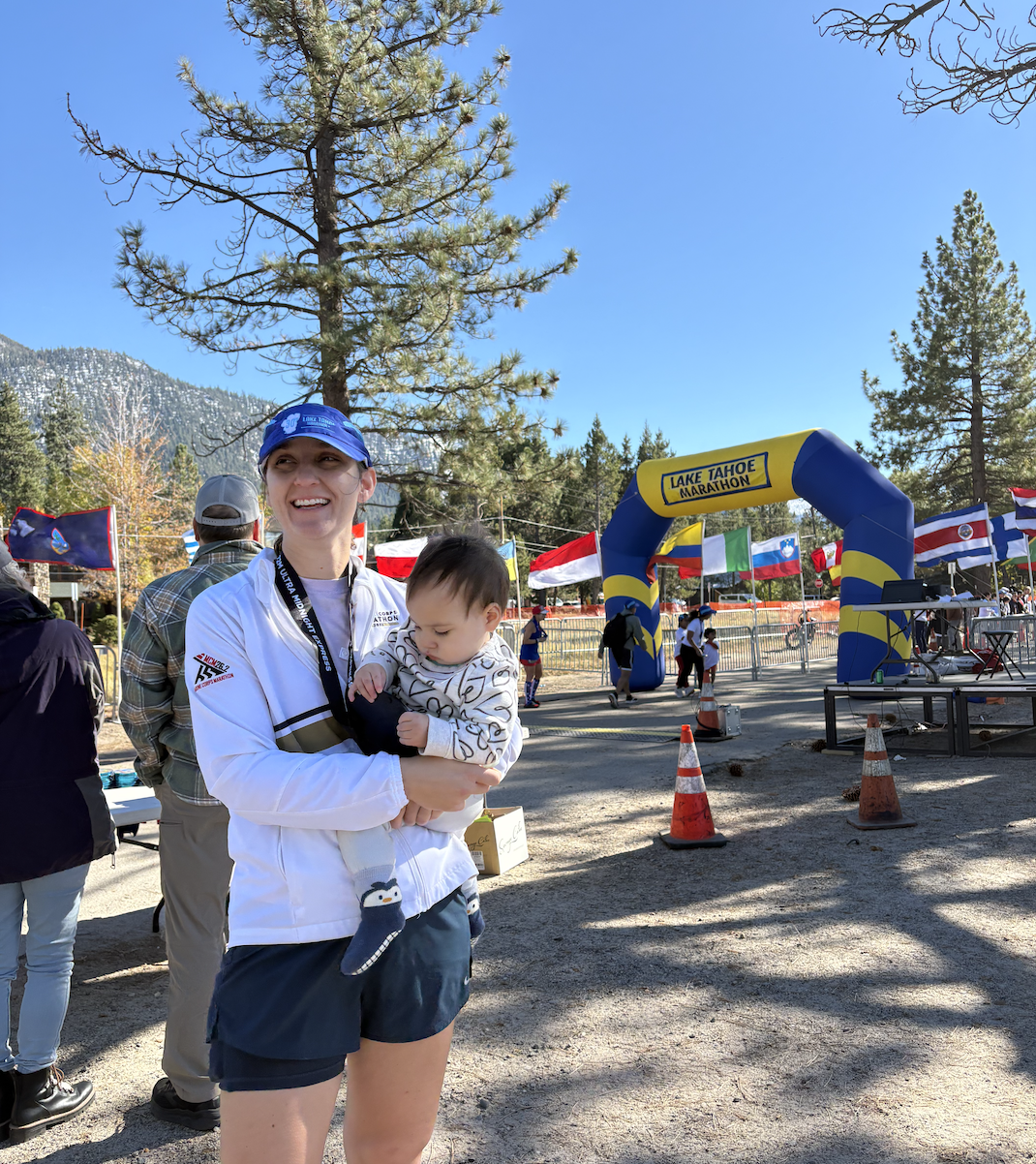
Slowly, each mile ticked by, and we crossed the finish line somewhere between 18 and 19 hours.
The Relief of Finishing
I’ve crossed a lot of marathon and half-marathon finish lines, but the relief waiting for me at this one was the greatest.
I think there’s a mental flag you have to carry for months when training for a long-distance event. It’s not only the running, but the unknown with how it’s going to go, what you need to prepare, whether you’ll be able to complete the goal, etc.
Now, for the first time this year, I’m able to have the satisfaction of completing the event and resting without looking forward to another 20-mile training run on the weekend.
Although my feet are still healing and running isn’t quite comfortable yet, I’m really proud to say I completed my first ultramarathon injury-free!
For anyone eyeing an ultra (or even a half or full marathon), prioritize the foundations - strength, mobility, sleep, fueling, and pacing. They’re not the glamorous parts of training, but they’re what make these extraordinary distances possible!
Finishing Thoughts
Running 72 miles taught me that you don’t have to run the whole time to make progress, and you don’t have to break down to achieve something extraordinary. You just have to keep moving forward.
If you’re thinking about tackling a big goal, whether that’s an ultramarathon or your first run back after injury, I’d love to help you build the strength and strategy to do it safely.
Questions about this topic? Reply to this email and we can talk more about it.
➡️ Reply to me directly at [email protected] to ask your questions or share your experience while dealing with running related injuries.
👟 Unsure how to balance it all? Reach out to me for 1:1 Run Coaching for your half, full or ultramarathon! We talk about nutrition, race, and training plan strategies that'll work for YOU and YOUR goals.
❤️🩹 Currently dealing with an injury?: Check out my Return to Run Program - a personalized strategy for you written by a Doctor of Physical Therapy and Run Coach.
✉️ Share with a running friend who you want to help stay injury-free this season!
Responses