Whether you’re a runner, someone returning from injury, or just trying to stay active and strong as you age, the squat is one of the best exercises you can do. But are you actually doing it right?
The squat is probably the MOST common exercise that I’ve educated patients on in my career as a physical therapist. The same principles apply whether someone is just getting out of the hospital bed for the first time or looking to PR their marathon.
A squat is one of the most foundational exercises and movements we perform on a daily basis.
This post will walk you through a quick test to check your form, understand why this move matters so much, and what to do to get the most from it—especially if you're looking to run strong and stay injury-free.
Why Squat Form Matters
The squat is one of the most foundational movements in human movement. It mimics sitting down and standing up, climbing stairs, lifting from the ground—things we all do every day.
But for runners, squats serve a specific purpose:
- Strengthening your glutes, quads, hamstrings, and calves in a movement pattern that mimics running.
- Helping you build force, absorb impact, and stabilize your legs through each stride.
- Creating a more durable, resilient body—especially when mileage ramps up.
If your squat is off, it can be a red flag for poor motor control, strength imbalances, or compensation patterns—all of which can lead to overuse injuries.
Quick Form Check: Are You Squatting Well?
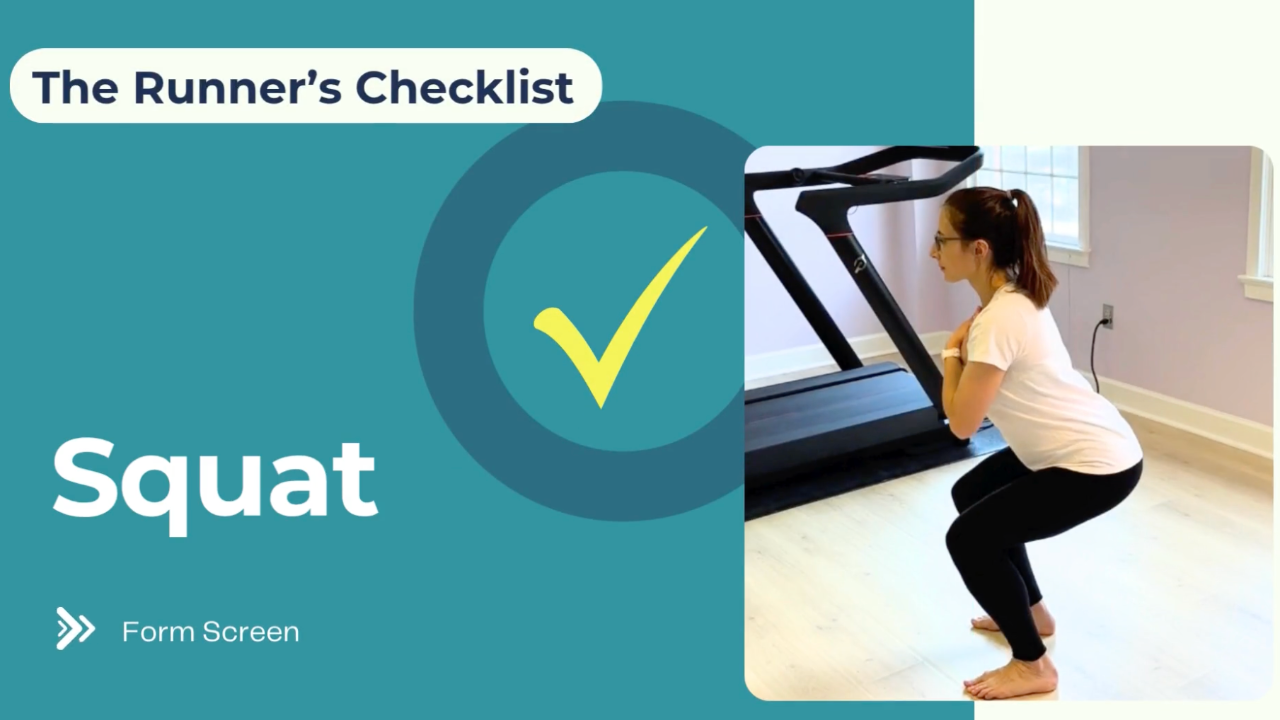
Here’s a simple checklist you can go through at home. Stand in front of a mirror or film yourself from the front and side.
Follow this link for instructions on checking your squat form:
 |
What to Look For:
- Keep your eyes looking forward: Looking up or down can throw off your alignment.
- Even weight distribution: You should feel balanced across both feet, not shifting onto your toes or heels.
- Knees aligned with feet: From the front view, watch that your knees don’t collapse inward or towards each other.
- Sit back like into a chair: Your hips should hinge back as you lower down—not just bend your knees forward.
- Heels stay on the ground: No heel lift! This can indicate tight calves or limited ankle mobility.
⚠️ Common Myth: “Don’t let your knees go past your toes”
You may have heard this advice before—and while it’s partially true, it’s often misunderstood and not the full picture.
In the early phase of the squat (first 50%), yes, your knees should stay behind your toes. But as you get deeper into the squat, your knees will need to move slightly forward to allow full hip depth. That’s normal and healthy, especially if you have adequate ankle mobility and no pain.
However, if you are having pain with a squat, this is one area where you’d consider modifying your squat to only go as far as you can without discomfort.
The Muscles that Squats Work
Squats target many of the major muscle groups that support healthy running mechanics:
- Glutes (especially glute max and glute med)
- Quads (the front of your thighs)
- Hamstrings
- Calves
- Core (for stability)
- Lower back and spinal stabilizers
When done correctly, it’s a true full-body strengthener—no machines required.
How to Begin Consistent Squatting (and Progress Over Time)
If you’re not already squatting regularly, here’s a simple and effective way to begin:
▶️ Week 1-2:
Bodyweight squats, 3 sets of 10 reps, 3x/week.
Focus on quality over speed. Make sure each rep looks and feels controlled.
▶️ Week 3+:
Once your form is solid and pain-free, add resistance. Hold a dumbbell or kettlebell at chest height (also known as a goblet squat).
Start with light weight and focus on maintaining good form.
- Work toward 3–4 sets of 6–8 reps with a weight that challenges you (you should be working hard by the last 2 reps).
- Do this 2x/week, leaving at least one day between strength sessions.
- Gradually increase the weight over the summer.
⚠️ You might feel muscle fatigue or soreness the day after a squat session—especially at first. That’s normal. But you shouldn’t feel sharp pain or joint discomfort.
Why You Should Start Now
If you’re planning to train for a half or full marathon in the fall, the off-season or base-building months (like summer) are the perfect time to build strength.
Use this time to:
- Lay the foundation for injury resistance
- Increase your max strength before fall mileage picks up
- Create movement habits that transfer into better running form
Once your race training begins, you can plateau the weight and shift to maintenance mode—still doing squats 2x/week to hold onto those gains.
The Bigger Picture: Your Strength as a Runner
Squats are just one piece of the puzzle when it comes to assessing your readiness for higher-level training or racing. If you're not confident in your form or you're unsure how your body stacks up, I created something to help:
Looking for Ideas to Improve Your Squat?
My Runner’s Checklist Course takes you through the form of foundational movements that relate the running and how to improve your form. Squatting is just the beginning!
If you are looking for exercises to improve your squat mechanics, download my free Runner’s Checklist Course Sampler.
The full self-guided video course walks you through 18 essential range of motion and strength tests (including squats), so you can identify weaknesses, improve your warm-up, and train smarter.
You'll learn:
- Why injuries happen—and how to prevent them
- How to build your own personalized warm-up
- Exactly what to work on (based on how you test!)
Whether you’re just getting back to running or training for your next PR, this course is your playbook for running strong and pain-free.
👉 Click here to learn more about the Runner’s Checklist Course
I hope you found this article helpful
✉️ Reply to me directly at [email protected] to ask questions about your personal squat form!
❤️🩹 Wondering if it's safe to run while having pain? That's why I made this free PDF download 3-Step Guide to Safer Running. Learn the top questions I ask clients to determine if running is still safe.

Responses